
11 Data Privacy Best Practices: The Essential List to Protect Your Information
- Posted on September 23, 2025
In today’s digital age, the importance of safeguarding your personal information cannot be overstated, especially in light of incidents like the recent TransUnion data breach that exposed millions of individuals’ sensitive data. Protecting your privacy is crucial, as cyber threats continue to evolve and data breaches become increasingly common.
This article will delve into data privacy best practices that everyone should follow to secure their information effectively. By implementing these 11 vital data protection practices, you can take proactive steps to enhance your online security and minimize the risk of your data falling into the wrong hands.
Data privacy definition
Data privacy refers to the protection of personal information and sensitive data from unauthorized access, use, or disclosure. It encompasses a broad range of practices and principles that ensure personal data is handled responsibly and ethically.
Data privacy is essential for safeguarding any information that can identify an individual or reveal personal details. This involves giving individuals control over how their data is collected, used, and shared, as well as ensuring transparency in data handling practices.
Data privacy examples
Social Security numbers are examples of private information because they are unique to each person. Financial records, like bank statements and credit card information, are also examples of private information because they show a person’s financial situation.
Health information, such as medical history and health insurance information, is also very private and needs strong privacy protections. Also, usernames and passwords are important for logging into personal accounts, so keeping them safe is very important.
Sensitive documents show even more how important it is to keep data safe. These can include tax returns, which have a lot of financial information; medical records, which show a person’s health history; personal correspondence, like emails and letters, which may show private thoughts and interactions; and identification documents, like driver’s licenses and passports, which are necessary for proving who you are and can be used against you if they are lost or stolen.
Data privacy practices checklist
In today’s digital world, it’s very important to keep your personal information safe. You can protect your data and lower risks by following these data privacy tips. Here is a list of specific things you can do to improve your data privacy.
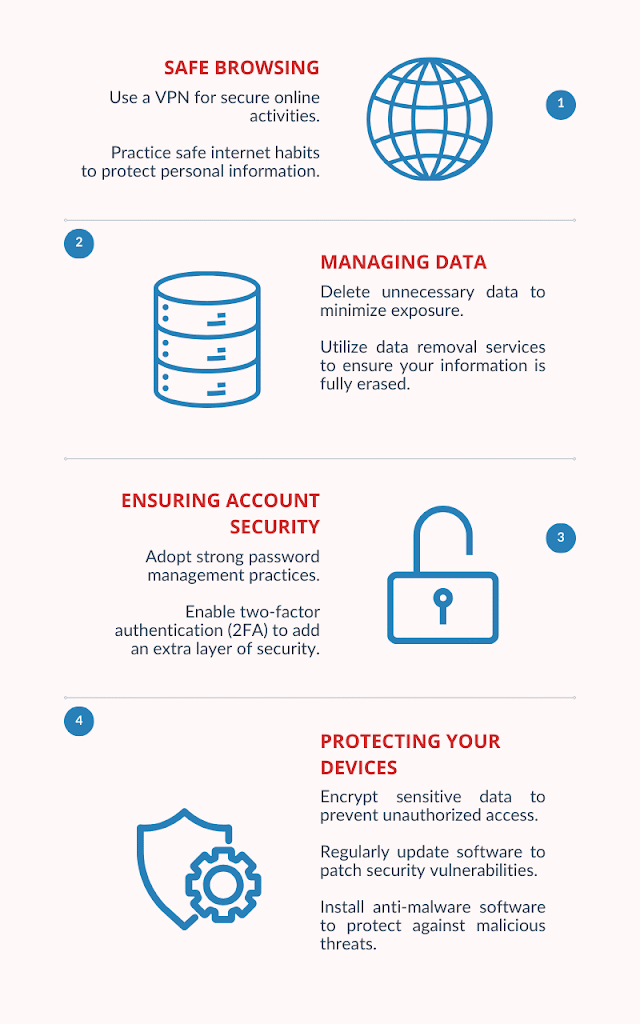
Delete data after It is no longer needed
Deleting data when it’s no longer necessary is essential for reducing the risk of unauthorized access. Retaining excessive information can expose you to data breaches and identity theft.
Make it a habit to regularly review and erase files you no longer need. For a thorough approach, consider a clean out your computer day to eliminate old documents and files.
Use data removal services
Using data removal services is important if you want to get your personal information back from data brokers. These services delete your data from different platforms, which makes it less likely that someone will use your information for bad things.
Companies like Incogni can help you handle data removal requests quickly and easily, so you can focus on other things while keeping your privacy safe.
Use a Virtual Private Network (VPN)
A Virtual Private Network (VPN) encrypts your internet connection, making it more secure and protecting your data from potential cyber threats.
Using a VPN is especially important when accessing public networks, as these can expose your information to hackers. Always choose a reputable VPN provider to ensure your online activities remain private and secure.
Ensure safe internet use
To keep your data and personal information safe, it’s very important to use the internet safely. Using public Wi-Fi is a big risk because it can let hackers see private information.
Don’t connect to networks that aren’t secure whenever you can. You might also want to use a network security key to protect your home internet connection. Always check to see if the sites you visit are safe, and use HTTPS-enabled sites whenever you can.
Beware of phishing scams
Phishing scams are dishonest ways for people to get your personal information by pretending to be trustworthy. These scams can steal your identity and cost you money.
Be careful of emails or messages that ask for private information that you didn’t ask for. Make sure you know who the sender is and don’t click on links that look fishy. Instead of responding to emails, enter your personal information on official websites.
Adopt password management practices
Strong, unique passwords are essential for protecting accounts from unauthorized access. Weak or repeated passwords can lead to security breaches. Use a password manager to generate and store complex passwords securely.
Enable two-factor authentication (2FA)
Two-factor authentication adds an extra layer of security to your accounts by requiring more than just a password to prove who you are. This lowers the risk of someone getting into your account without your permission, even if they get your password. Always choose 2FA when it’s available to protect your data even more.
Encrypt data
If you encrypt your data, it will stay safe even if it gets into the wrong hands. Encryption changes your data into code that can’t be read, so you can’t get to it without a special key or password.
This is especially important for private data that is stored on devices or sent over networks. Always use encryption tools to keep your important files and messages safe.
Keep software up-to-date
It’s very important to keep your software up to date to stay safe. Software updates often include fixes for security holes that hackers could use.
If you don’t keep your system up to date, you could be at risk for malware attacks and data breaches. When you can, turn on automatic updates and check for them on all of your devices on a regular basis.
Install anti-malware software
Installing anti-malware software is vital for protecting your devices from malicious threats. This software detects and removes harmful programs that can compromise your data security.
Be particularly cautious of scams, such as the Apple Security Alert Scam, which attempts to trick users into downloading harmful software. Ensure your anti-malware software is updated regularly to provide optimal protection against evolving threats.
How companies collect, use, and share your information
Companies use a number of ways to get personal information, such as cookies, web tracking, online forms, and interactions on social media. People often give information on purpose when they sign up for services, buy things, or take surveys. Companies also use cookies and other tracking tools to learn about users’ habits, preferences, and browsing habits.
Companies use this personal information for many things after they get it, like making the user experience better, targeting ads, and making products and services better. They might also give this information to other people, like advertisers, data brokers, and business partners, for marketing or research.
But these actions pose serious privacy risks and concerns. Collecting data can let people get into your accounts without permission, steal your identity, and lose control over your personal information. Users frequently lack awareness regarding the utilization or sharing of their data, resulting in potential misuse.
Because of this, people need to be careful and know what data collection practices mean in today’s digital world.
What to do in case of a data breach
If you suspect that your data has been compromised in some data breaches, it’s crucial to act quickly to protect sensitive data.
Follow these steps to mitigate potential damage and protect your information:
- Change Your Passwords: Immediately update passwords for any affected accounts, as well as other accounts using the same password. Use strong, unique passwords for each account.
- Monitor Your Accounts: Keep a close eye on bank and credit accounts for any unauthorized transactions. Report any suspicious activity to your financial institution right away.
- Enable Two-Factor Authentication (2FA): If available, enable 2FA on your accounts for an extra security layer.
- Check for Breaches: Use websites like Have I Been Pwned to see if your email address or other information has been part of data breaches.
- Report the Breach: Contact the company that experienced the breach to report your concerns. They may provide guidance and support specific to your situation.
- Notify Credit Reporting Agencies: Consider placing a fraud alert or credit freeze with major credit bureaus to prevent identity theft.
When reporting a data breach, expect the company to provide information about the breach’s nature, the data compromised, and any steps they are taking to mitigate harm. They should also inform you of resources available to help you monitor and protect your information moving forward.
Wrap up
To sum up, following the best practices for data privacy is very important for keeping your personal information safe in today’s digital world.
Some important things to do are to delete data that you don’t need, use data removal services, use a VPN, make sure you’re using the internet safely, be on the lookout for phishing scams, manage your passwords well, turn on two-factor authentication, encrypt your data, keep your software up to date, and install anti-malware software.
You can greatly improve your online security by doing these things. Our website has a lot of information and detailed guides on how to keep your personal data safe.
FAQs
What are the 7 principles of data privacy?
The seven principles of data privacy are:
- Consent: Individuals should have control over their personal data and provide explicit consent for its use.
- Purpose Limitation: Data should only be collected for specified, legitimate purposes and not used beyond those.
- Data Minimization: Only collect the data necessary for the intended purpose.
- Accuracy: Personal data should be accurate and kept up to date.
- Storage Limitation: Data should only be retained for as long as necessary to fulfill its purpose.
- Integrity and Confidentiality: Secure handling of data to protect against breaches.
- Accountability: Organizations must demonstrate compliance with data privacy principles.
Are there any regulations that protect my personal data?
Yes, several regulations protect personal data, including the General Data Protection Regulation (GDPR) in the EU, which sets strict guidelines for data handling and consent, and the California Consumer Privacy Act (CCPA) in the U.S., which gives consumers rights regarding their information. Other countries have similar laws, like Brazil’s LGPD and Canada’s PIPEDA, aimed at ensuring transparency and individual control over data while imposing penalties for non-compliance.
What is the difference between security and data privacy?
Security and data privacy are related but distinct concepts. Security refers to the measures and tools used to protect data from unauthorized access, breaches, and cyber threats. This includes physical security, encryption, and access controls.
Data privacy, on the other hand, focuses on the proper handling of personal information, ensuring that individuals have control over how their data is collected, used, and shared. In essence, security is about protecting data, while privacy is about respecting individuals’ rights regarding their personal information. Both are essential for safeguarding sensitive data in today’s digital world.
In today’s digital age, the importance of safeguarding your personal information cannot be overstated, especially in light of incidents like the recent TransUnion data breach that exposed millions of individuals’ sensitive data. Protecting your privacy is crucial, as cyber threats continue to evolve and data breaches become increasingly common. This article will delve into data…